Lopez: MIAA concession payments have reached 70 billion pesos
GNBy GPS Newsroom
Photograph: ABS CBN
Acting Transportation Secretary Giovanni Lopez cited a specific figure on Thursday to defend the government's airport privatisation model, saying concession payments to the Manila International Airport Authority have already reached around 70 billion pesos.
Speaking on Hot Copy - ANZ, Lopez used the figure to argue that PPP deals do not surrender public assets — they generate revenue the government can redirect to social programmes while private operators fund airport upgrades.
"I think the last count that I have, the payment to MIAA already reached around 70 billion because of this concession," Lopez said.
PH transport chief names Davao as first in new airport PPP bundle, 4 more to follow
GNBy GPS Newsroom
Photograph: ABS CBN
Acting Transportation Secretary Giovanni Lopez said Davao airport is the first in a new bundle of regional airports to be turned over to private operators under public-private partnership deals, with four additional airports to follow — the clearest inventory yet of the administration's airport privatisation pipeline, he told Hot Copy - ANZ.
"Right now po, I can name yung Davao," Lopez said, adding that negotiations on the bundled project are ongoing among his department, another agency he referred to as KAAP and DOTR.
Lopez said the PPP model frees up government funds that would otherwise go to airport infrastructure, allowing those resources to be redirected to social programs.
New Manila airport project 'on track' — Lopez cites ongoing Bulacan runway work
GNBy GPS Newsroom
Photograph: ABS CBN
Also on Hot Copy - ANZ, Lopez gave a brief update on the New Manila International Airport in Bulacan, saying runway construction is ongoing and that the project — described as a concession with a private aerocity developer — is proceeding on schedule.
"On-going po ang proyekto ng Bulacan Airport, ang sinasabing New Manila International Airport — that is the concession," he said ["The Bulacan Airport project — what is being called the New Manila International Airport — that is a concession arrangement"]. He indicated the facility is expected to be operational within the next few years.
The airport, intended to decongest the existing Ninoy Aquino International Airport, has been a flagship infrastructure priority of the Marcos administration.
PH transport chief: Reducing base airfare is the priority, not travel tax
GNBy GPS Newsroom
Photograph: ABS CBN
Speaking on Hot Copy - ANZ, Acting Transportation Secretary Giovanni Lopez said the department's immediate focus is on cutting base airfares rather than reforming the travel tax, which he stressed falls outside his agency's mandate.
"I will be pretentious if I'm going to discuss right now the travel tax because that is not within the province of DOTR," Lopez said, adding that any reduction in the base fare would nonetheless ease the overall cost burden on passengers even if the travel tax remains unchanged.
Lopez said President Marcos has given the Department of Transportation two clear directives: make commuting safe, and make it more comfortable for the riding public.
Adiong draws a line: 'The impeachment court is not a criminal proceeding'
GNBy GPS Newsroom
Photograph: ABS CBN
Closing out his interview, prosecution panel spokesperson Zia Alonto Adiong offered what amounted to a summary of the prosecution's legal theory: the Senate impeachment court operates on a different standard from criminal courts, and the two must not be conflated.
"Ang Impeachment Court is not a criminal proceeding," he said, stressing that the guilt or innocence of any alleged hitman is a matter for the regular courts — not the Senate sitting as an impeachment tribunal.
The NBI's active investigation, he added, served a specific purpose in the trial: not to produce a named suspect, but to establish that the Vice President's statements constituted a serious national security concern rather than mere hyperbole or conditional expression.
Adiong: prosecution must stay formal step-by-step — 'hindi lang po ng bating tao' the audience
GNBy GPS Newsroom
Photograph: ABS CBN
Wrapping up a broader discussion on prosecution strategy, House prosecution panel spokesperson Zia Alonto Adiong pushed back on suggestions that the panel should shift to a more populist style of communication inside the courtroom.
He acknowledged the tension — social media demands plain language, but Senate Rules demand formality — and said the prosecution is conscious of both. "Kailangan din natin maging conscious about how we cross or how we examine our witness para mas madali din maintindihan," he said ["We also need to be conscious about how we cross-examine our witness so it is easier to understand"] — adding that the audience is not only the general public but also the senator-judges who expect evidence laid out in proper legal order.
The panel's strategy, he said, is to avoid any approach that could be accused of trivialising allegations — "itong cheese-mease" [loose talk, throwaways] — while using press conferences and post-trial summaries as the bridge to a wider audience.
Adiong: closing Article 4 doesn't block future hitman case — 'that is a separate piece'
GNBy GPS Newsroom
Photograph: ABS CBN
House prosecution panel spokesperson Zia Alonto Adiong addressed a question from anchor Alvin Elchico on whether the prosecution could return to Article 4 — the Grave Threats article — if a presumed hitman surfaces in the coming months, even after the article is formally closed.
Adiong drew a clear distinction: the betrayal of public trust charge, he said, already stands on the Vice President's own utterances. Whether the NBI can eventually identify the hitman, he said, is an entirely different track.
"Yung utterances, we spoke — whether or not NBI can finally identify the hitman, that is a separate piece because that is already..." he said, the thought cutting off as the segment ended. The implication, as he framed it: the trial of public trust does not depend on a named hitman being produced.
Adiong: prosecution stays formal to avoid Senate Rules violations — not just for optics
GNBy GPS Newsroom
Photograph: ABS CBN
Prosecution spokesperson Zia Alonto Adiong pushed back on suggestions that the panel should simplify its courtroom presentation for a mass audience, explaining there is a legal reason the prosecution cannot simply loosen its style.
"Kailangan din natin maging conscious about how we cross or how we examine our witness para mas madali din maintindihan — hindi lang ng bating tao," he said ["We also have to be conscious about how we cross-examine our witnesses so it is easier to understand — not just for ordinary people."].
Adiong said the step-by-step, formal manner of presenting testimony is necessary so the prosecution cannot be accused of using strategies that run counter to the Senate's impeachment rules. The communication challenge, he conceded, is real — but the solution lies in press conferences and post-session summaries, not in changing how evidence is laid down inside the court.
Adiong: press conferences and post-trial summaries are prosecution's bridge to the public
GNBy GPS Newsroom
Photograph: ABS CBN
The House prosecution panel's spokesperson, Zia Alonto Adiong, pushed back on criticism that the prosecution's courtroom presentation is too legalistic to reach ordinary Filipinos — but acknowledged the challenge of translating technical legal arguments for a mass audience on social media.
Asked by the host whether the panel needs to pivot its communication style, Adiong pointed to existing tools: press conferences held before and after each trial day, and what he described as the production of summaries — "tidbits" and recaps — explaining what happened inside the impeachment court.
"Kailangan po ba ngayong mag-shift para mas iba ba sa level ng masa," the host asked ["Does the prosecution now need to shift so it can communicate at the level of the masses?"] — a question Adiong answered by defending the panel's current off-court briefings as the mechanism for public outreach, without committing to any change in courtroom style.
Adiong: popularity ratings cannot define 'betrayal of public trust' — the Constitution sets that bar
GNBy GPS Newsroom
Photograph: ABS CBN
Prosecution spokesperson Zia Alonto Adiong pushed back sharply on the defense's use of survey data, arguing that high approval ratings for Vice President Sara Duterte are legally irrelevant to the impeachment charges against her.
"Popularity is not necessarily translated into what the constitution says about holding public office," Adiong said, adding that survey results are inherently unreliable as a standard — "minsan bababa, minsan tataas" ["sometimes they go down, sometimes they go up"] — and therefore cannot be treated as a definitive measure of public trust.
Adiong argued that "betrayal of public trust," as an impeachable offence, is defined by the constitutional mandate of the office itself — not by periodic satisfaction surveys, which he described as inconsistent and non-consensual in their methodology.
Adiong: people are also judges — trial 'not purely legal or technical'
GNBy GPS Newsroom
Photograph: ABS CBN
Responding to criticism that the prosecution's courtroom presentation is too legalistic compared with the defense's more accessible visual aids, prosecution spokesperson Zia Alonto Adiong said his panel has always insisted the impeachment trial operates on two tracks simultaneously — legal and political.
"This is also about the people evaluating the proceedings in the trial, evaluating the manner by which Senator Judges will also approach the case," Adiong said, adding: "We've been saying that the people is also part of the judges."
He maintained the House prosecution panel was, in fact, the first side to deploy digital evidence in court — presenting the NBI witness's testimony on the authenticity of a video in which, Adiong alleged, the Vice President herself described a meeting where a plot to kill the President and a former Speaker was discussed.
Adiong dismisses defense survey slide: 'It does not have to be taken seriously'
GNBy GPS Newsroom
Photograph: ABS CBN
House prosecution panel spokesperson Zia Alonto Adiong pushed back hard on the defense's use of Vice President Sara Duterte's trust ratings as a visual aid in court, calling the tactic misleading and arguing survey numbers carry no legal weight in an impeachment trial.
"Hindi nga siya, minsan fluctuating, the result of the survey is fluctuating. Minsan bababa, minsan tataas," Adiong said. ["It is not — sometimes it fluctuates, the result of the survey fluctuates. Sometimes it goes down, sometimes it goes up."]
He warned against treating a popularity contest as a substitute for answering the actual allegation — that the Vice President betrayed the public trust. "It does not have to be taken seriously in one in which you equate that as an answer to the allegation," he said.
Adiong: defense strategy to question Lascañas document 'was anticipated by the prosecution'
GNBy GPS Newsroom
Photograph: ABS CBN
Wrapping up his defence of how the Lascañas document was introduced, prosecution spokesperson Adiong said the pushback from the defense was not a surprise.
"Yung naman talaga inanticipay ng prosecution panel," he said ["That was something the prosecution panel truly anticipated"], adding that the presiding officer, Senator Chiz Escudero, already understood the purpose for which the document was being presented before any objection was raised.
Adiong reiterated that the document was introduced not to establish the truthfulness of Lascañas's account, but to show the materials and sources on which the NBI is basing its active investigation.
Prosecution: Presiding officer already understood why Lascañas document was introduced
GNBy GPS Newsroom
Photograph: ABS CBN
House prosecution panel spokesperson Zia Alonto Adiong told the broadcast that Presiding Officer Francis Escudero was clear on the limited purpose of the Arturo Lascañas affidavit when it was read into the record by an NBI witness.
Adiong said the document was not presented to prove whether Lascañas was telling the truth, but to establish what materials the NBI already held when it launched its active investigation. He said Escudero even reminded senator-judges of exactly that distinction — that the credibility of Lascañas's account was not the point.
"The presiding officer already knew and understand the purpose by which this document was presented," Adiong said, adding that the defense's move to challenge the document's truthfulness was a strategy the prosecution panel had fully anticipated.
Law dean: Arrest now requires filing a complaint — 'reasonable certainty of conviction' the new bar
GNBy GPS Newsroom
Photograph: DZBB
Pressing further on the double-standard debate raised by senator-judge Raffy Tulfo, law dean Deriquito-Mawis said the standard for proceeding to arrest has effectively shifted: prosecutors and investigators now apply a test of "reasonable certainty of conviction" before moving, meaning cases they fear may be dismissed are not pursued to the arrest stage.
She described this as a structural problem, not just a judgment call. "Talagang double standard ang tingin ng justice system sa ating bansa," she said ["The justice system in our country truly applies a double standard"].
With the warrantless-arrest window closed, she said the only remaining path for accountability in the cases discussed is through formal complaint and preliminary investigation — a slower process with a higher evidentiary threshold at the outset.
Law dean explains why no warrantless arrest was possible: 'Walang window na yun'
GNBy GPS Newsroom
Photograph: DZBB
Law dean Atty. Ma. Soledad Deriquito-Mawis laid out the precise legal reason no arrest has been made without a warrant, telling the GTV panel there are only three situations under Philippine rules of criminal procedure that allow warrantless arrest: catching someone in the act (flagrante delicto), hot pursuit when officers have personal knowledge of a crime and the suspect is fleeing, and arrest of an escaped detainee.
The critical point, she said, is that all three require immediacy — the window must be seized in the moment. In the cases being discussed, that window has already passed.
"Wala hong nag-arrestong. Kaya nagkaroon na, pwede pa bang kasuhan — the answer is yes, pero hindi mo na maarestuhang walang warrant. Dapat mag-file," she said ["Nobody made an arrest at the time. So now, can charges still be filed — the answer is yes, but you can no longer arrest without a warrant. You have to file a complaint"], adding that the proper route is a complaint triggering a preliminary investigation.
Senator Raffy Tulfo presses: why no arrest, unlike others in Duterte-era cases?
GNBy GPS Newsroom
Photograph: DZBB
Senator-judge Raffy Tulfo raised a pointed question during the broadcast discussion of NBI Director Melvin Matibag's Day 8 testimony: why had a key figure named in the investigation not been arrested, in contrast to others — including a named individual arrested in connection with former President Rodrigo Duterte — who were taken into custody.
Atty. Deriquito-Mawis acknowledged the observation carried weight. She said a person with significant power and influence is treated differently by the system, and that the changed arrest standard — requiring near-certainty of conviction before acting — helps explain the disparity.
"Talagang double standard ang tingin ng justice system sa ating bansa," she said ["There is truly a double standard in how our justice system views things in our country"].
Law dean: Justice system applies 'double standard' — arrests now require 'reasonable certainty of conviction'
GNBy GPS Newsroom
Photograph: DZBB
Attorney Ma. Soledad Deriquito-Mawis, Dean of the College of Law at Lyceum of the Philippines University, told the broadcast that the basis for making arrests has effectively shifted.
"Nagbago na po ngayon ng batayan ng hustisya kung baga reasonable certainty of conviction," she said ["The standard of justice has now changed — something like a reasonable certainty of conviction"]. Under that higher bar, she said, an arrest cannot simply be made on suspicion because the case risks being dismissed.
Her remarks came after she acknowledged what she called a "double standard" in how the justice system treats individuals with power and influence compared to ordinary suspects — a distinction, she said, that is plainly visible in this case.
Law dean: NBI 'persons of interest' disclosure in open court was not premature — 'I am just reporting to the public'
GNBy GPS Newsroom
Photograph: DZBB
A pointed exchange emerged over whether the NBI director, Melvin Matibag, should have disclosed in open impeachment court that the investigation already has persons of interest — when that investigation is still unfinished.
The defense had flagged the testimony as hearsay, arguing Matibag could not name names. But Atty. Deriquito-Mawis pushed back on the premature-disclosure argument, paraphrasing the NBI's posture: "Ma'am it's not premature, I'm just reporting to the public — hindi pa tapos ang investigasyon" ["the investigation is not yet finished"].
She said the NBI's caution in withholding identities was reasonable — to avoid naming the wrong person and to give persons of interest the chance to respond before the bureau — framing the disclosure as a status report, not a premature accusation.
Law dean: Matibag testimony 'strong' only in context — 'prosecution built a solid story together'
GNBy GPS Newsroom
Photograph: DZBB
The law dean, Atty. Ma. Soledad Deriquito-Mawis of Lyceum of the Philippines University, offered her most direct assessment yet of Day 8 NBI director testimony: it should not be judged alone.
"Hindi siya dapat on its own. Kasi nakapagportreho sila ng isang solid na kuwento," she said ["It should not stand on its own. Because together they have drawn a solid story"] — referring to the cumulative weight of witnesses who testified before Matibag.
She said Matibag was notably candid about the limits of his personal knowledge on the first investigation, but that his account of the second, ongoing investigation — which already has persons of interest — gives the prosecution significant momentum. "Malaki ang chance na ilusot ng prosecution," she said ["There is a big chance the prosecution gets this through"].
Law dean: Impeachment evidence cannot simply be 'inserted' into any ICC case — due process required
GNBy GPS Newsroom
Photograph: DZBB
Asked directly whether the evidence being presented in the impeachment trial — including the Lascañas testimony — could be used to bring VP Sara Duterte before the International Criminal Court in The Hague, the law dean, Atty. Ma. Soledad Deriquito-Mawis, said no such shortcut exists.
"Hindi ho pwede ang isingit lang," she said ["It cannot simply be inserted"]. She added that any ICC case would require its own full process — including a separate filing, preliminary investigation, and the full procedural rights of the respondent — just as was done when former President Rodrigo Duterte faced charges.
"Karapatan din ho niya yan," she said of VP Duterte ["That is also her right"]. The dean's position is that the impeachment trial and any potential ICC referral are separate legal tracks that cannot be merged by a simple amendment or cross-reference.
Law dean: Prosecution weaving Lascañas, slapping video and Matibag testimony into single 'pattern of violence' theory
GNBy GPS Newsroom
Photograph: DZBB
The law dean, Atty. Ma. Soledad Deriquito-Mawis of the Lyceum of the Philippines University College of Law, says the prosecution's strategy is to link multiple pieces of evidence — the Lascañas affidavit, footage of VP Sara Duterte slapping a sheriff, and the NBI testimony — into one overarching argument: that the Vice President has a demonstrable tendency toward violence.
"Ang purpose is to prove or establish the pattern of violence, I think it should be admitted," she said ["The purpose is to prove or establish the pattern of violence — I think it should be admitted"].
She explained that the video of the slapping incident is material not as proof of a crime in itself, but as the starting point of the pattern the prosecution is trying to construct before the impeachment court. The Lascañas affidavit, read into the record by NBI Director Melvin Matibag, adds new alleged details — including a claim that Duterte, then mayor, ordered a suspect to be kidnapped and killed at a quarry — to reinforce that same narrative arc.
Law dean: Lascañas affidavit admitted 'not to establish the truth' — but prosecution strategy 'very smart'
GNBy GPS Newsroom
Photograph: DZBB
Atty. Ma. Soledad Deriquito-Mawis, Dean of the College of Law at Lyceum of the Philippines University, appeared on the morning broadcast to break down how the prosecution used the Lascañas affidavit despite it being un-notarized.
She cited the ruling of Presiding Officer Francis Escudero on the document's admission: "It is admitted as part of his testimony but not to establish the truth of whatever was stated in the affidavit." The prosecution, she explained, did not offer it to prove the contents directly — instead, it was threaded into the NBI director's testimony to show that there was a documented pattern of violent tendency, one of the criteria the NBI used to establish the existence of a grave threat.
Deriquito-Mawis called the approach a strong tactical move — "napakagandang estratehiya ng ginawa ng prosecution" [a very good strategy by the prosecution] — but immediately raised the question the court must still answer: whether the affidavit, admitted on those limited terms, will actually stand up against VP Sara Duterte on Article IV of the impeachment complaint.
Defense challenges Lascañas affidavit: 'unsigned, not notarised'
GNBy GPS Newsroom
Photograph: DZMM
Defense counsel Michael Poa moved to discredit the affidavit of Arturo Lascañas — a self-confessed former Davao Death Squad member whose documentary evidence was submitted as part of the prosecution's case — arguing it should carry no legal weight.
"Walang pirma, hindi napanotaryo," Poa told the court — ["No signature, not notarised."] The defence's position is that the document fails basic authentication requirements and cannot be relied upon to establish Vice President Sara Duterte's alleged role as an architect of extrajudicial killings.
Lascañas is not appearing as a live witness; his testimony is being introduced through documentary evidence only.
Vice President Sara Duterte has departed for an overseas trip to Qatar, Germany, the United Kingdom, Northern Ireland, and The Netherlands between July 16 and 31, Malacañang confirmed on Tuesday.
The Office of the Vice President said the itinerary includes both official foreign travel and personal engagements, and that no government funds will be used for the entire duration of the trip, Allen Limos reports for The Manila Times.
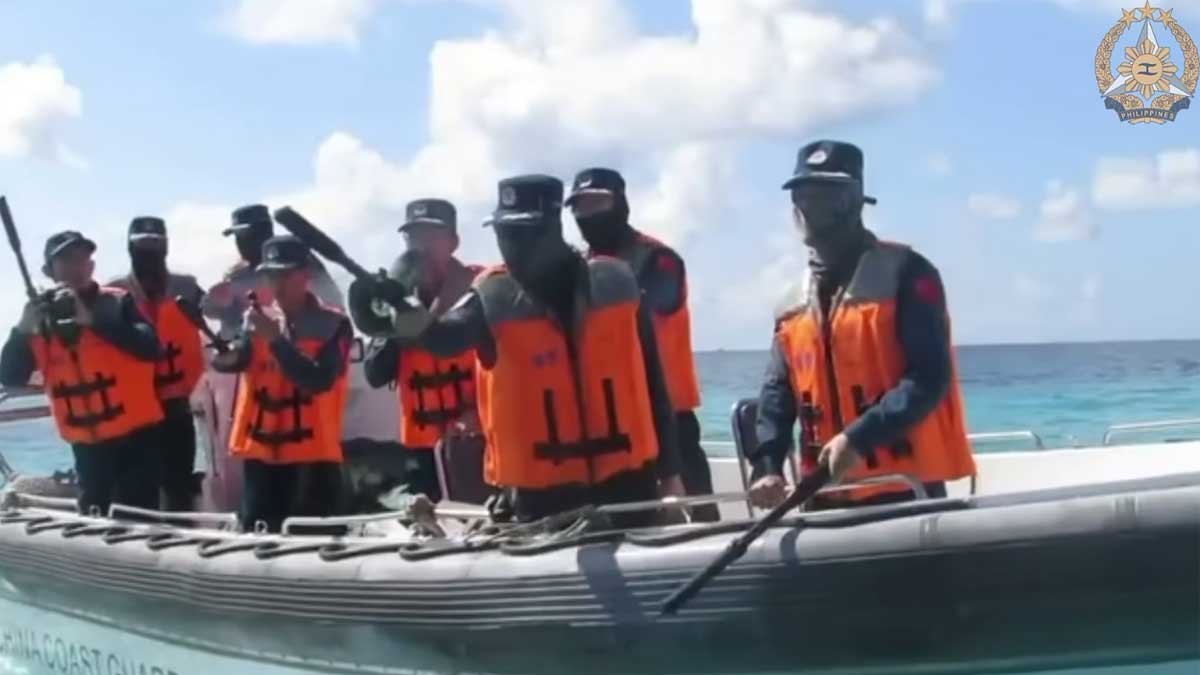
The Chinese ambassador to the Philippines, Jing Quan, told reporters on Tuesday that his sudden meeting with President Ferdinand Marcos Jr. was "constructive" and involved "an in-depth exchange of views" rather than diplomatic protest, despite a recent confrontation between the Chinese Coast Guard and Philippine Navy at Ayungin Shoal on June 17.
Jing said both parties agreed to keep parts of the private discussion confidential but that they discussed "a whole range of issues" beyond the latest incident, including how to manage difficulties in bilateral relations. He confirmed that Beijing had summoned the Philippine ambassador to China, Jaime FlorCruz, likely to protest the clash.
Despite the confrontation, Jing said South China Sea negotiations between the two countries remain on track. "We hope to finish negotiations by the end of this year," he said. "After several rounds of negotiations, the two sides are actually meeting each other halfway." The Philippine Daily Inquirer reports.
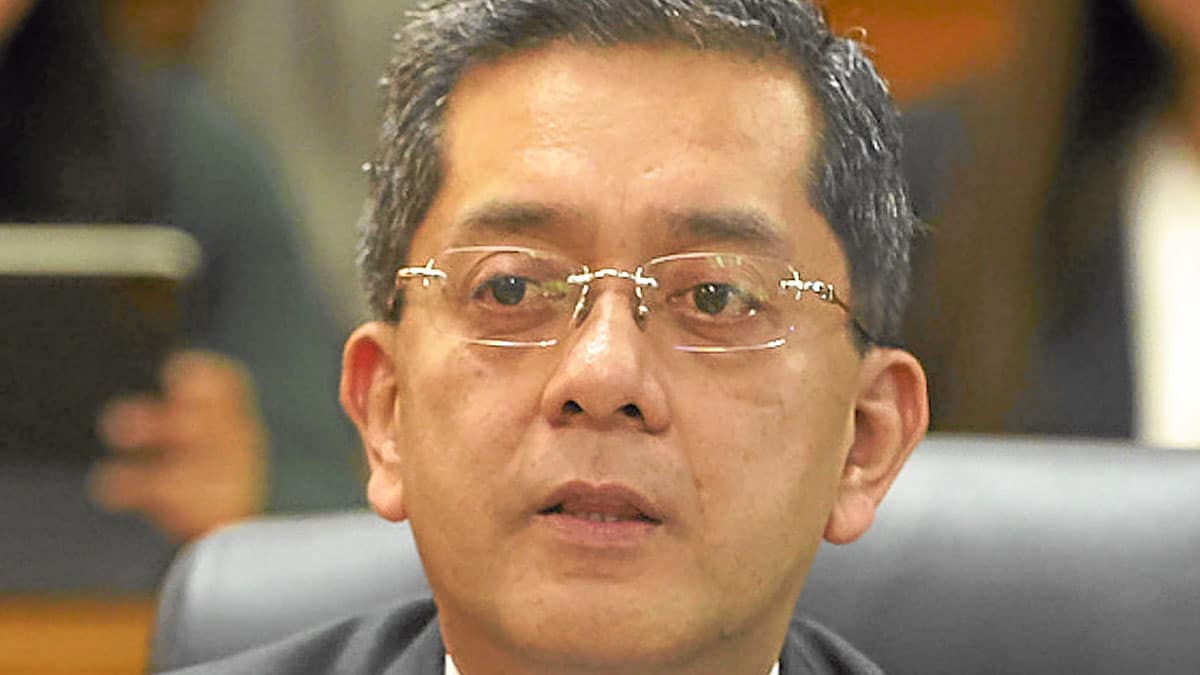
The Commission on Elections chair, George Erwin Garcia, said on Tuesday that Vice President Sara Duterte remains eligible to run in the 2028 presidential election as long as she has not received a final judgment of conviction in her impeachment trial.
"As long as there is no final judgment of conviction in a criminal case, anyone can run," Garcia told reporters, adding that candidates can still contest cases on appeal without losing their eligibility. He noted the Comelec has a ministerial duty to accept certificates of candidacy and cannot prohibit candidates from seeking office.
Duterte was impeached by the House in May on four grounds including alleged misuse of confidential funds, unexplained wealth, distribution of payments to education officials, and threats against President Ferdinand Marcos Jr. and others. Her trial, which began in early July, is scheduled for 92 trial days. She declared her intention to run for president in February, the Philippine Daily Inquirer reports.
The US State Department condemned "dangerous and aggressive actions" by China following a confrontation between Chinese and Philippine sailors at Ayungin Shoal in the West Philippine Sea, as US Secretary of State Marco Rubio arrived in Manila on Tuesday for an Asean Foreign Ministers' Meeting.
"China's troubling pattern of provocations against the Philippines' legitimate maritime operations undermines regional peace and stability and directly contradicts China's repeated commitments to resolve disputes peacefully," the state department said in a statement, according to Agence France-Presse.
On Monday, Philippine and Chinese sailors clashed at the disputed shoal in what Manila said was an assault by China Coast Guard personnel on Filipino sailors near a beached vessel serving as a garrison, the Philippine Daily Inquirer reports.
The Philippine military accused the Chinese Embassy on Tuesday of releasing an incomplete video of Monday's confrontation near the grounded BRP Sierra Madre at Ayungin Shoal, omitting the events that led to the clash, the Philippine Daily Inquirer reports. Rear Adm. Roy Vincent Trinidad, the Armed Forces of the Philippines' spokesperson on West Philippine Sea matters, said the edited footage did not show Chinese Coast Guard vessels approaching within 20 to 30 metres of the Sierra Madre in the Philippine exclusive economic zone before Philippine Navy personnel responded.
China's Coast Guard claimed that Philippine Navy personnel in rubber boats ignored warnings, surrounded and rammed a Chinese patrol boat, and attacked with oars and sticks. Trinidad rejected the account, saying the Chinese crew initiated the confrontation by photographing and filming the Sierra Madre. "If they started at the very beginning, you would see that the boats came into close proximity of BRP Sierra Madre.
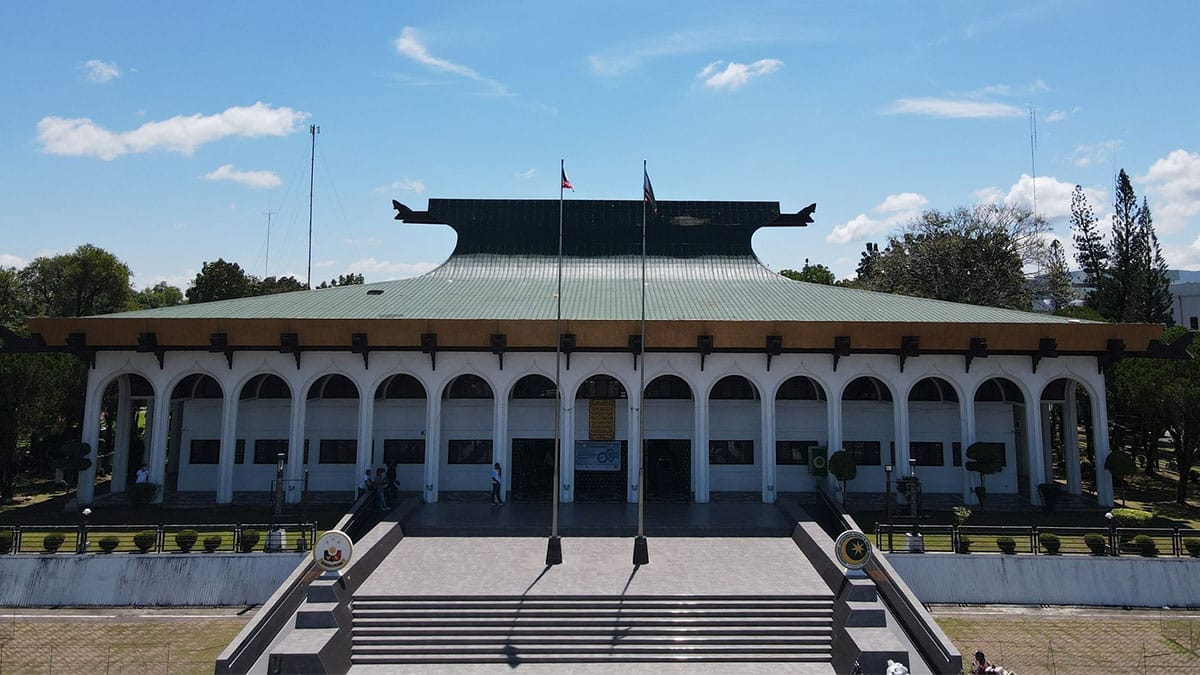
Police officers in the Bangsamoro Autonomous Region in Muslim Mindanao have been instructed to remain impartial as the region prepares for its first parliamentary elections on September 14, the Philippine Daily Inquirer reports. Brig. Gen. Christopher Abecia, director of the Police Regional Office-Bangsamoro, told officers on Monday that "the world is watching us in this first parliamentary election in the BARMM," and reminded them that "the credibility of the polls depends largely on the integrity of law enforcement."
Security operations are being intensified in 27 municipalities classified by the Commission on Elections as high-risk due to their history of election violence. The Philippine National Police will deploy 8,299 personnel across BARMM, including 4,983 regional officers, 1,316 from national support units, and 2,000 augmentation personnel from other regions. The election gun ban is already in effect.
Comelec Chairman George Erwin Garcia said no election-related attacks against candidates or voters have been recorded so far, and recent grenade attacks in Maguindanao were directed at military personnel, not election-related.

_2026_07_21_11_54_38.jpg)